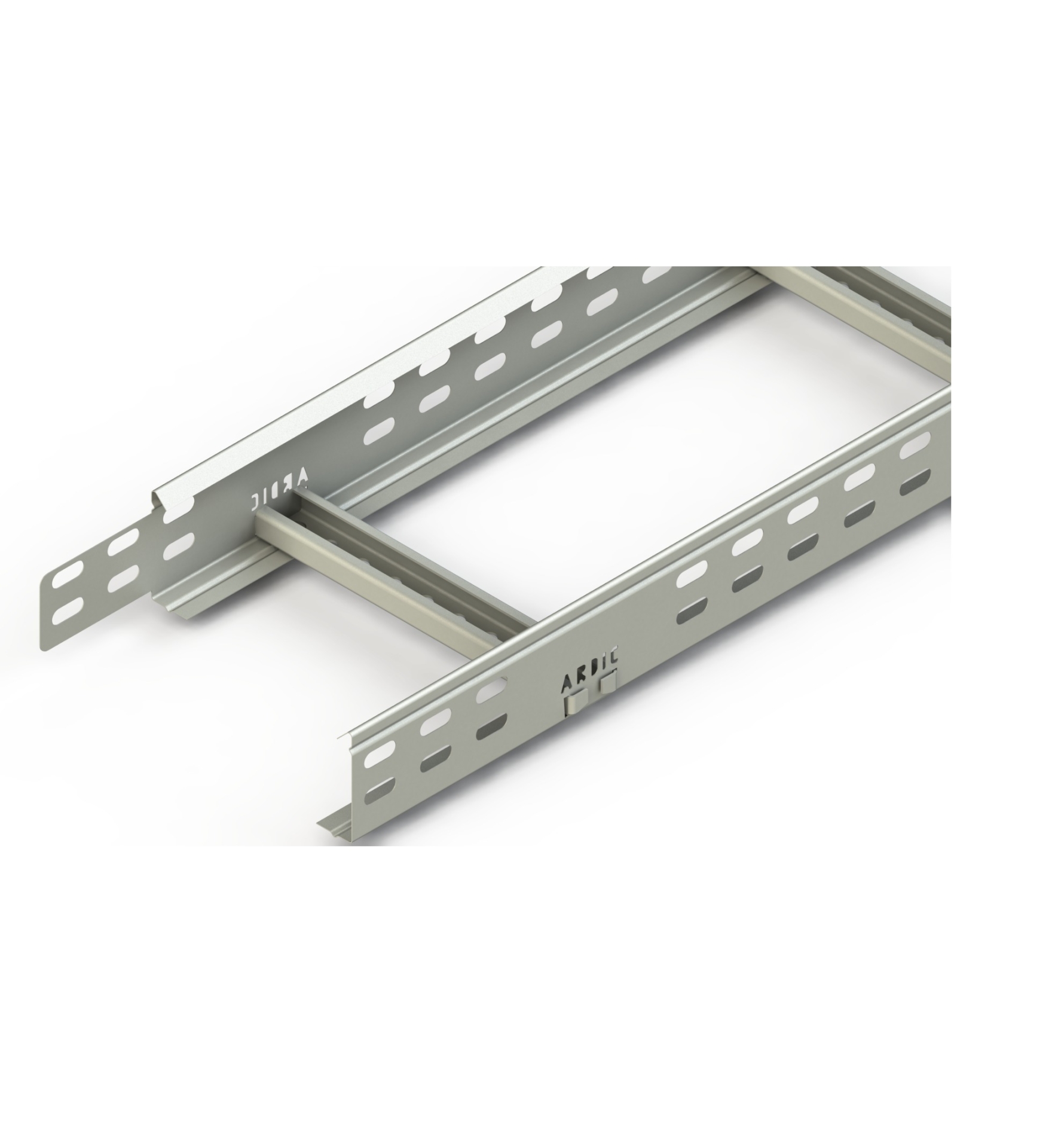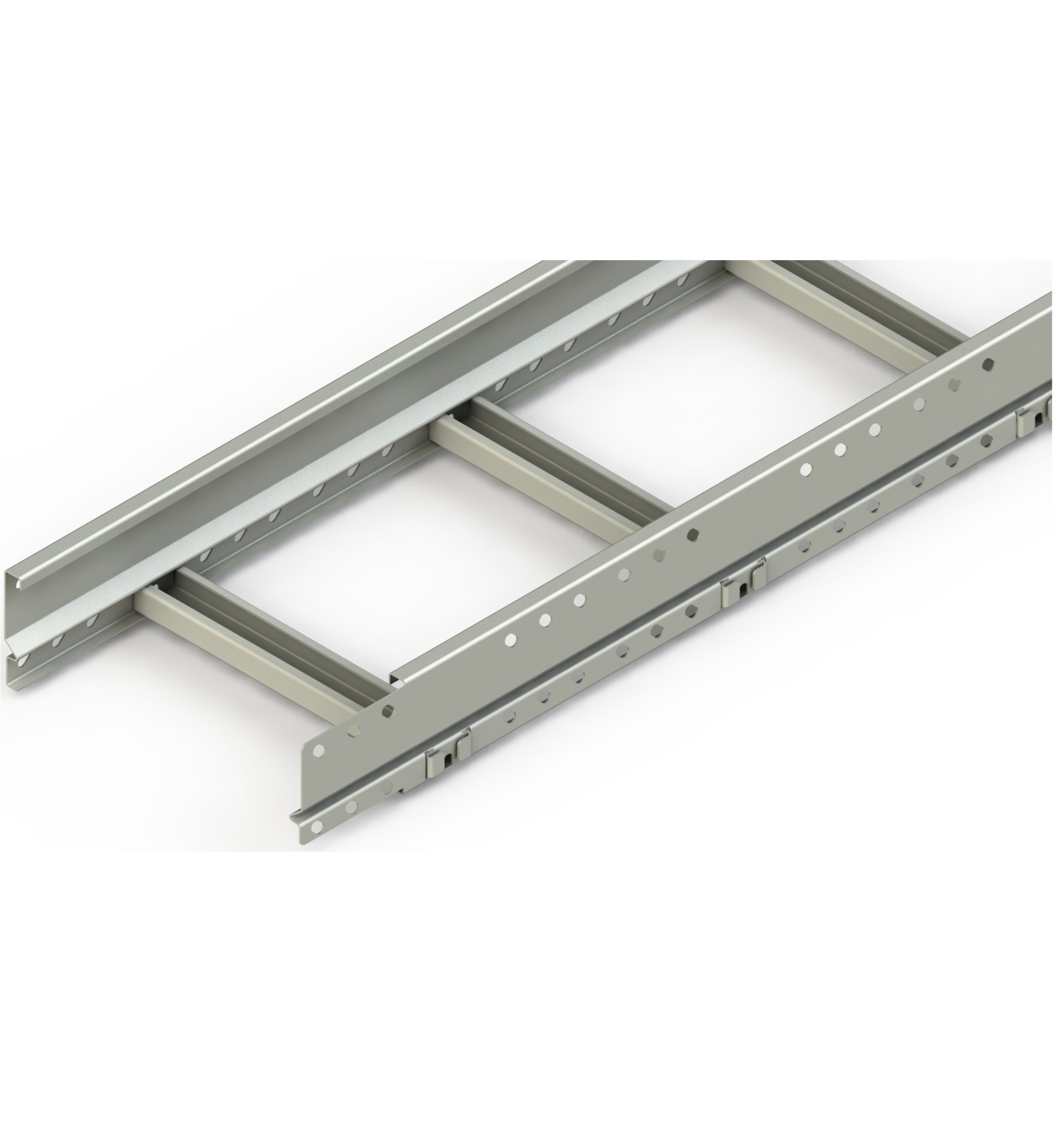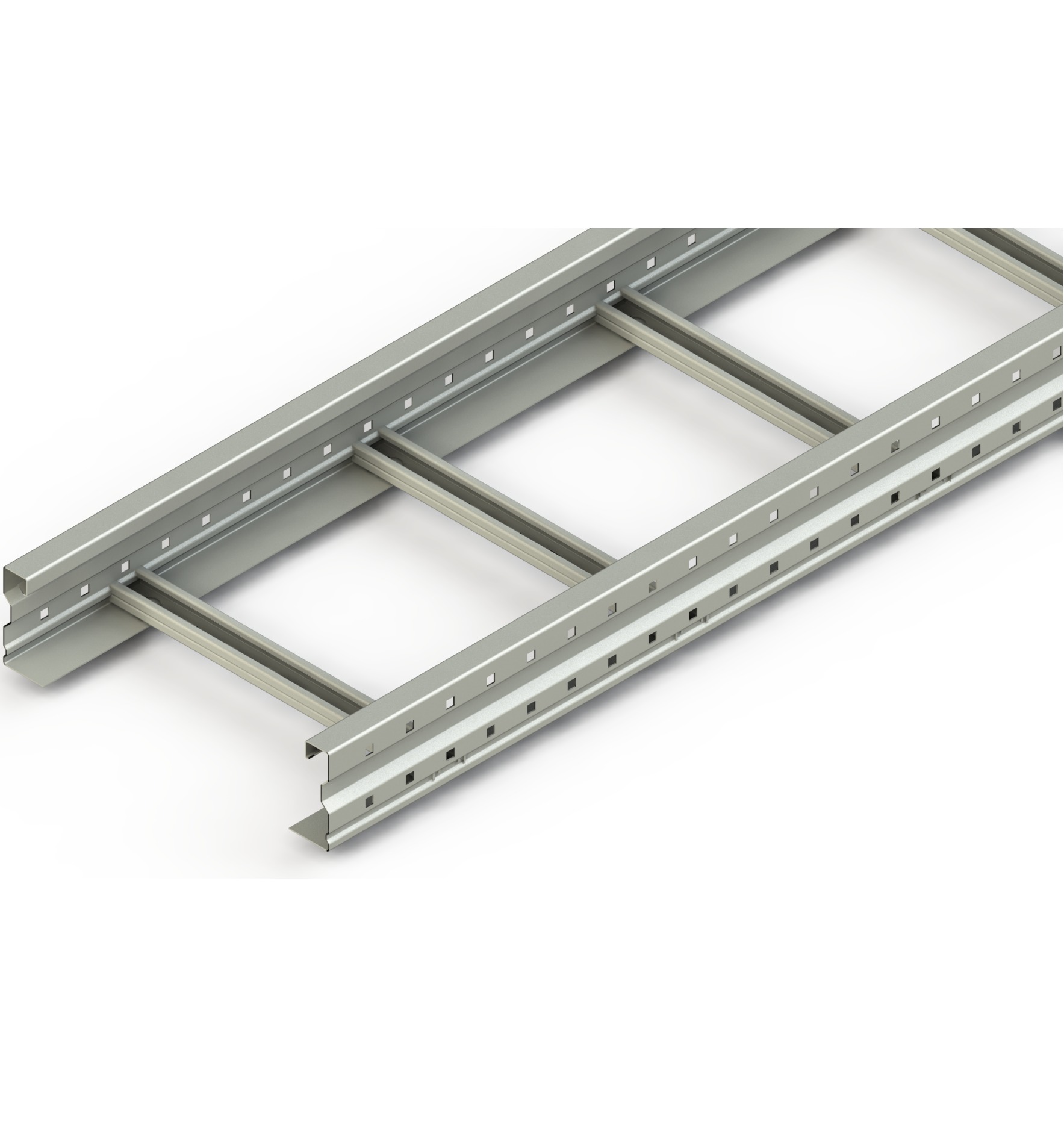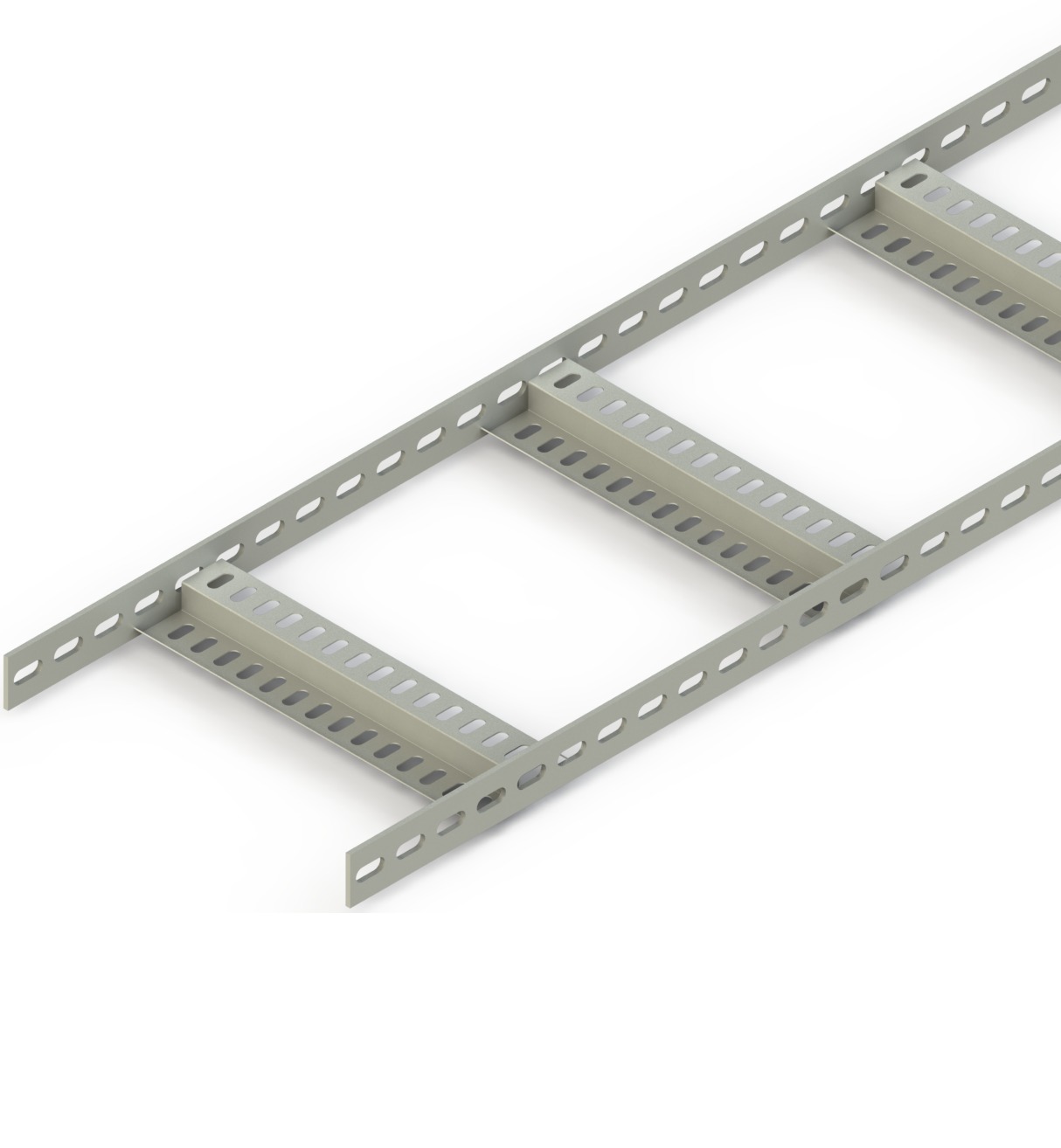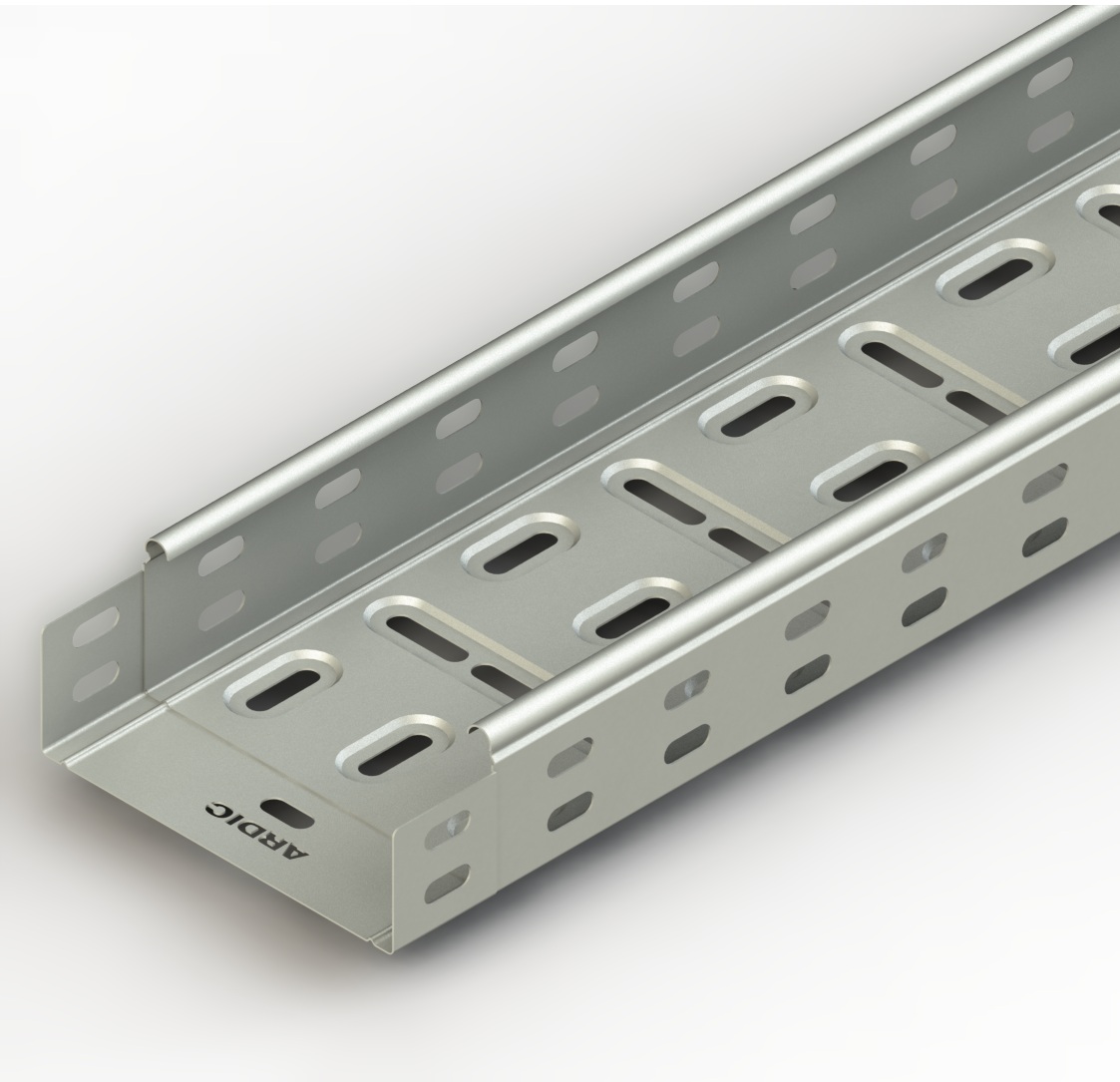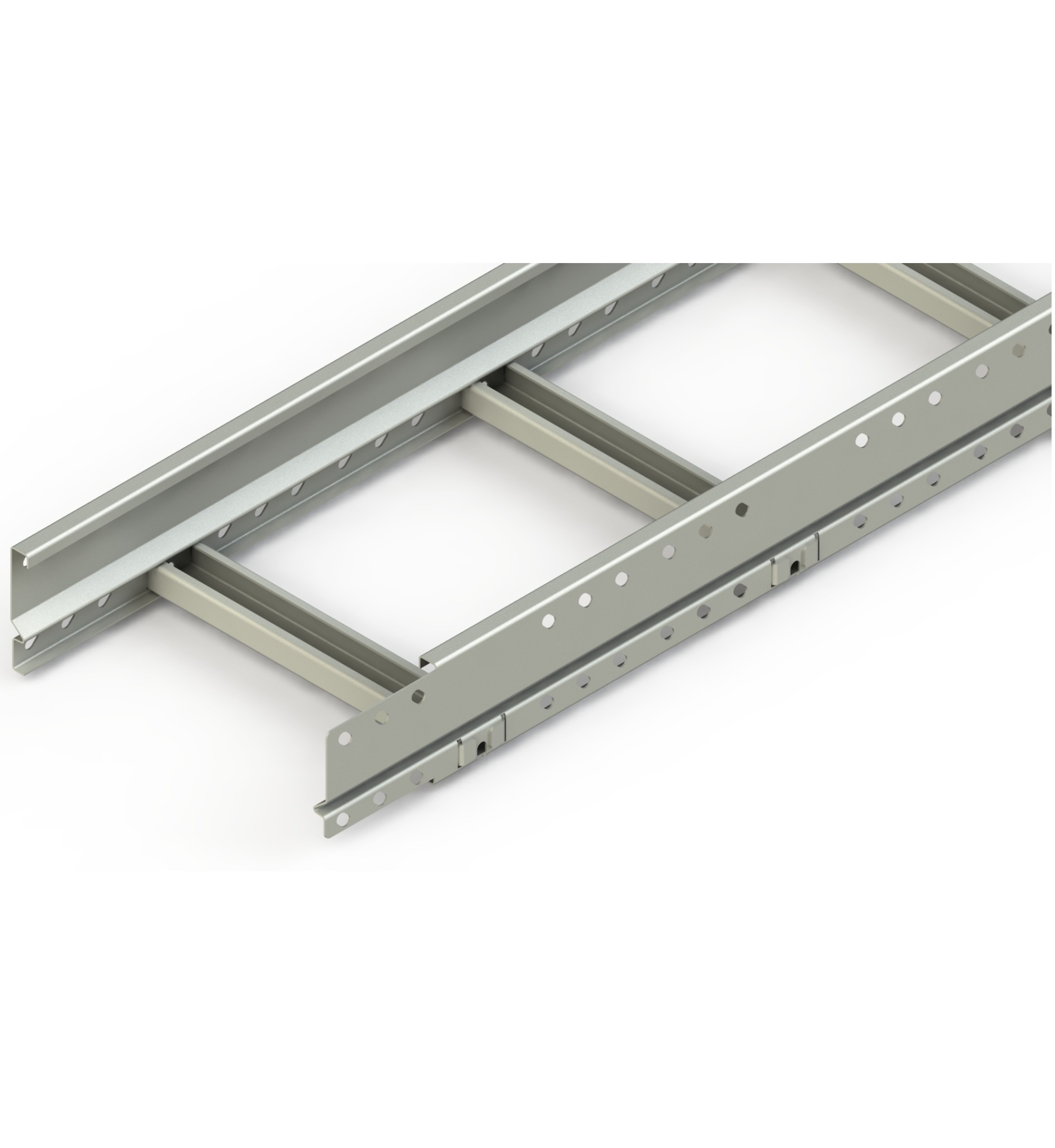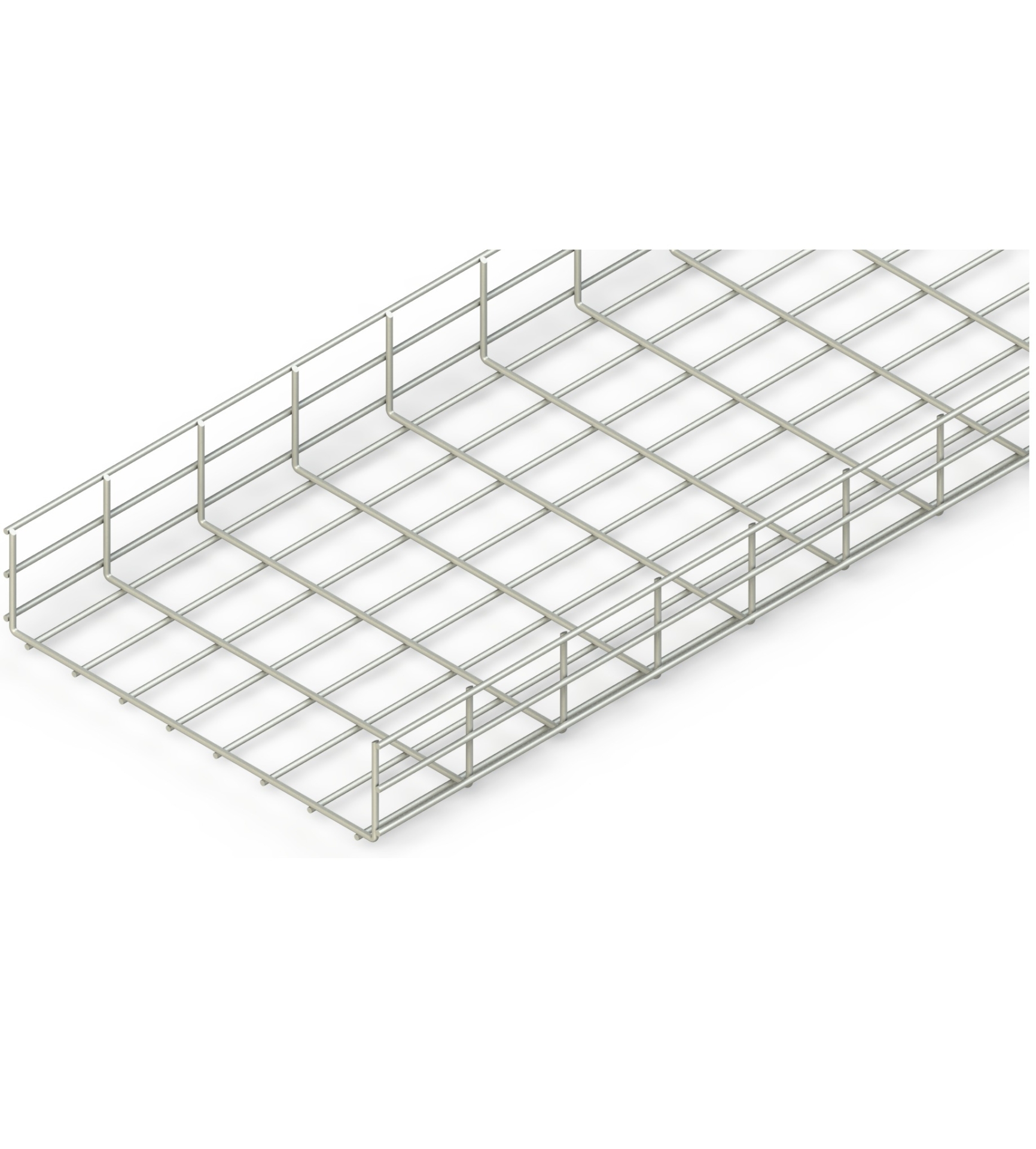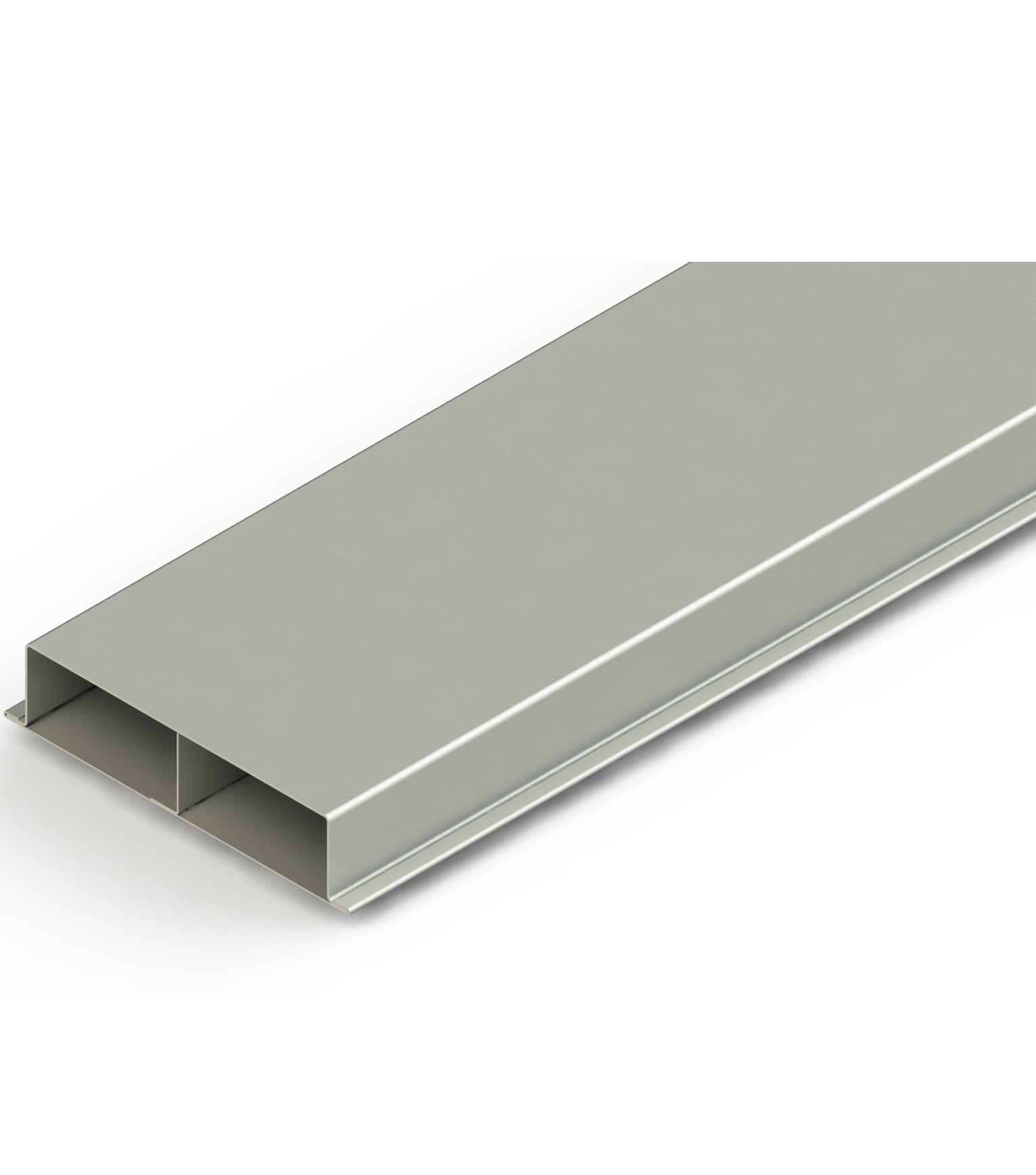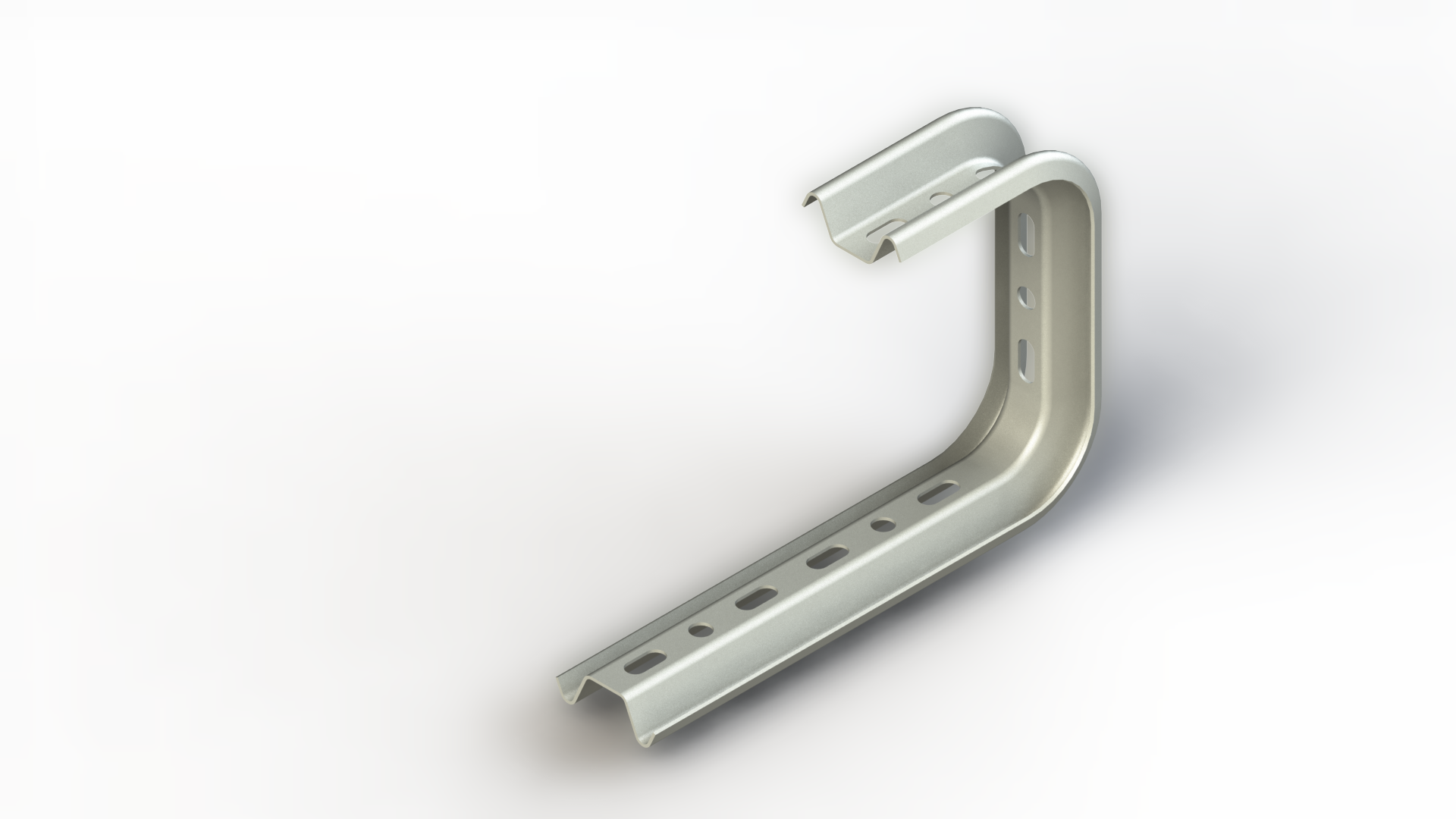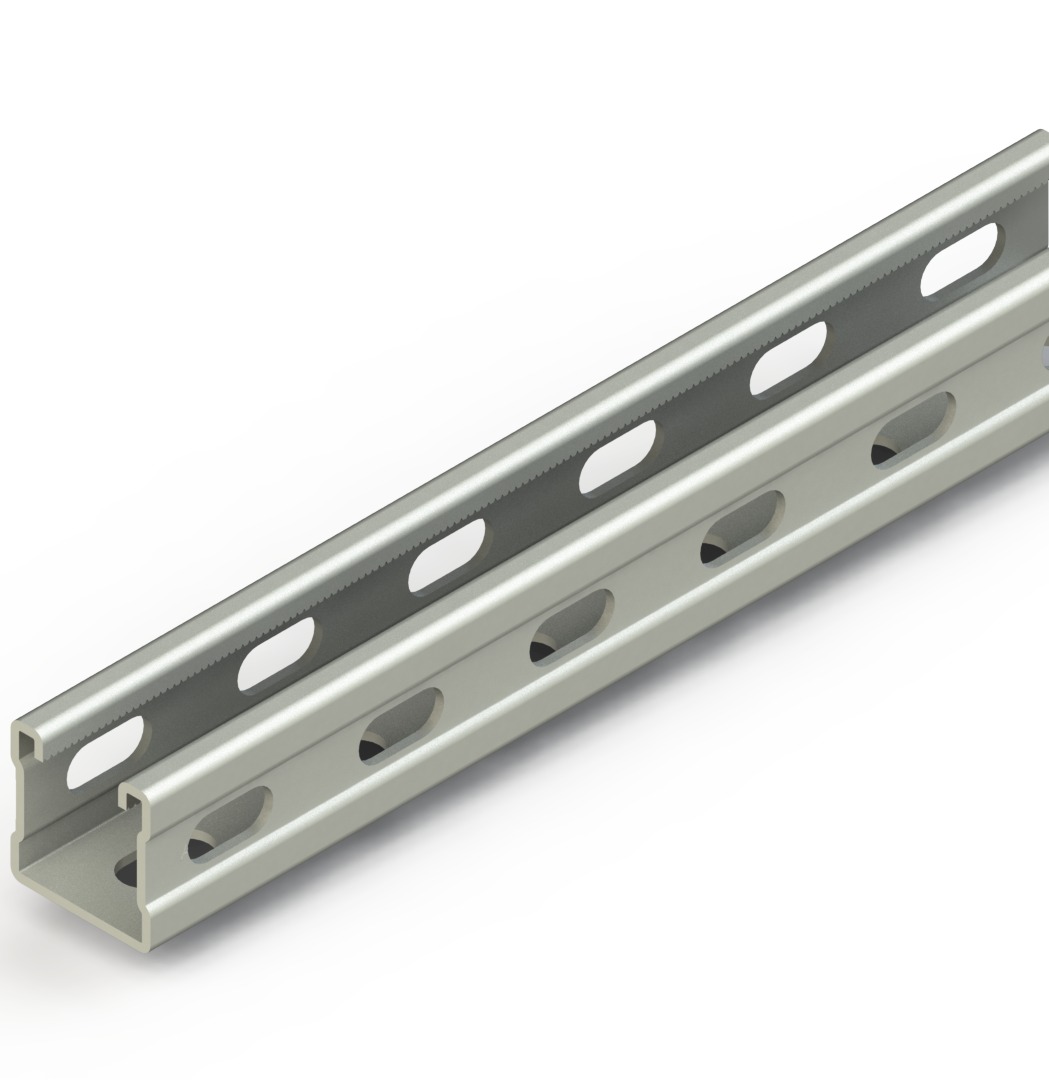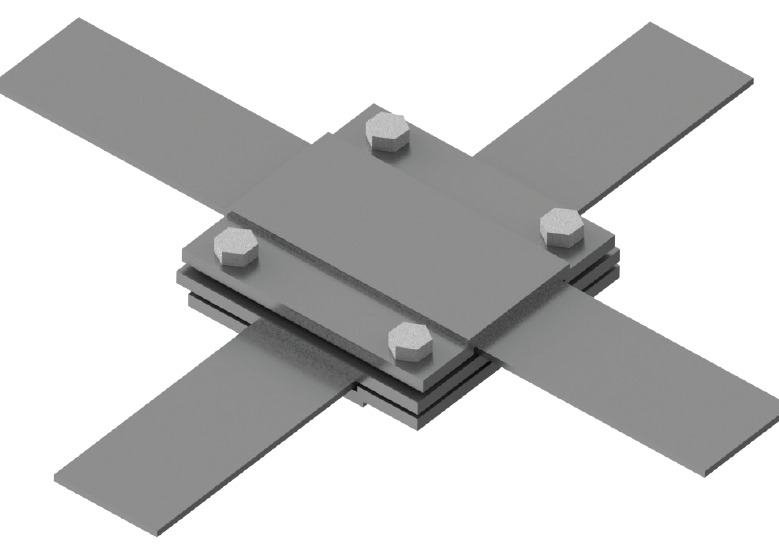



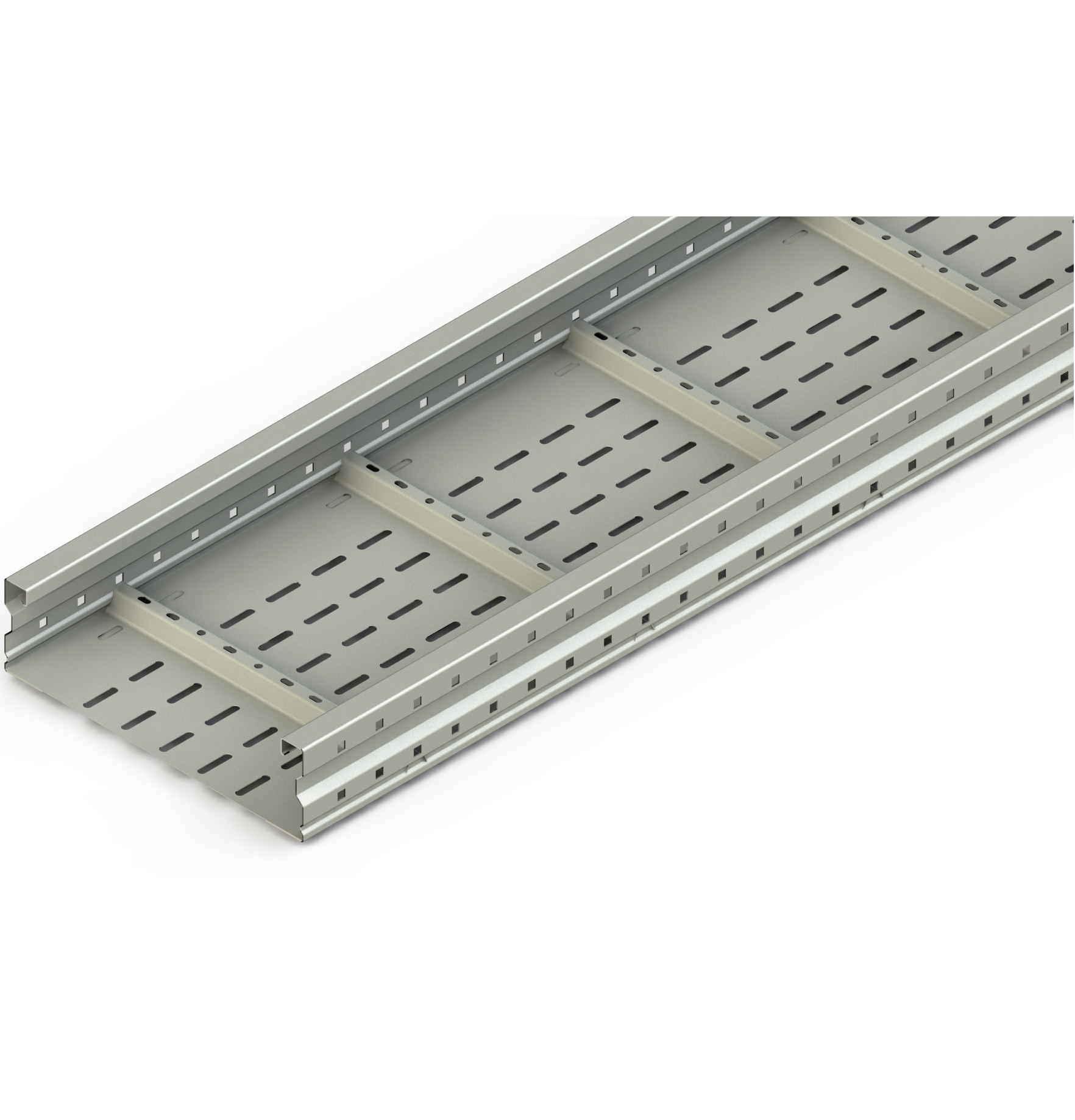
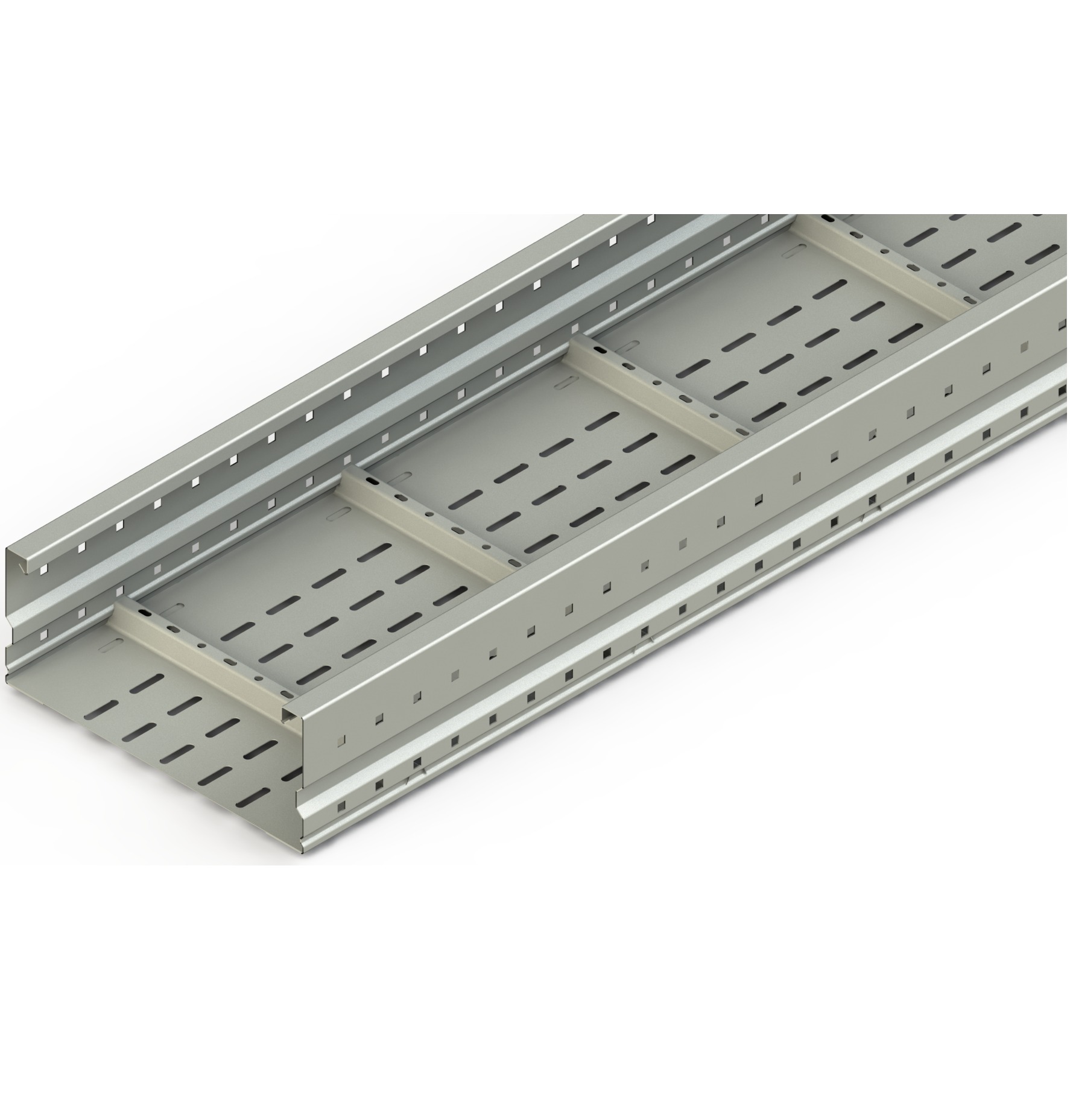
Ardıç FTD Hybrid Cable Ladders combine the reinforced structural design of heavy-duty cable ladders with the continuous cable support surface of perforated metal cable trays. Featuring specially reinforced side rails, a continuous perforated steel base and non-welded snap-fit rungs, the FTD series offers a hybrid cable management solution for demanding industrial installations.
Based on the structural principles of the FMD cable ladder series, FTD provides a reinforced cable support system with an integrated perforated bottom, making it suitable for applications where continuous cable support and structural strength are both important.
Hybrid Cable Ladder and Perforated Cable Tray Design
The defining feature of the FTD series is its continuous perforated metal base integrated into the cable ladder structure.
Unlike conventional open-rung cable ladders, where cables are supported at intervals by individual rungs, FTD provides a more continuous supporting surface along the cable route.
This design is particularly useful for installations where additional support beneath the cables is desirable. The perforations provide openings for cable fixing arrangements and allow some airflow through the base.
FTD therefore combines characteristics of both cable ladders and perforated cable trays while remaining part of the Ardıç cable ladder product family.
Reinforced Side Rails Based on the FMD Design
FTD uses the specially reinforced side rail concept found in FMD Heavy Duty Cable Ladders.
The reinforced rail geometry contributes to structural rigidity and resistance to bending under load. The key difference between FMD and FTD is the additional continuous perforated bottom integrated into the ladder construction.
Available side rail heights of 100, 150 and 200 mm provide configuration options for different industrial cable routing requirements.
Actual load-bearing capacity must be determined using the applicable product load graphs, steel thickness, ladder dimensions and support spacing.
Non-Welded Snap-Fit Rung Construction
FTD cable ladder rungs are mechanically secured to the side rails using a specially designed snap-fit system. No welding is required at the rung connections.
Each standard 3000 mm section contains 10 snap-fit cross-members, which form part of the hybrid supporting structure together with the continuous perforated base.
Eliminating welding at the rung joints helps avoid localized surface and protective coating damage associated with welding operations, reducing potential corrosion-sensitive areas at these connections.
Overall corrosion resistance depends on the selected surface finish, environmental conditions and installation practices.
Separate Splice Coupler Connection System
Like the FMD series, FTD requires separate splice couplers for connecting straight cable support sections.
Each straight joint requires two splice couplers. This differs from the integrated connector-free quick-fit systems used in the CM and FM cable ladder ranges.
The appropriate fastening hardware and installation arrangement must be selected according to the relevant technical documentation.
For route changes and junctions, explore Cable Ladder Accessories and verify compatibility with the selected FTD dimensions.
FTD Hybrid Cable Ladder Dimensions and Specifications
- Available widths: 200, 300, 400, 500 and 600 mm
- Side rail heights: 100, 150 and 200 mm
- Steel thicknesses: 1.5 and 2.0 mm
- Standard section length: 3000 mm
- Bottom construction: Continuous perforated steel base
- Cross-members: 10 non-welded snap-fit rungs per standard section
- Straight connections: Two separate splice couplers
- Surface finishes: Pre-Galvanized (PG) and Hot-Dip Galvanized (HDG)
- Additional options: Alternative production lengths and stainless steel (SS304)
These specifications reflect the currently published FTD product range. Available combinations of width, height, thickness and finish depend on the individual product code.
FTD Cable Support Systems for Industrial Applications
FTD hybrid cable ladders can be considered for industrial plants, manufacturing facilities, power infrastructure and electrical installations requiring continuous support beneath cable runs.
Engineers should evaluate total cable weight, cable diameters, installation geometry, support spacing, environmental exposure and the required connection components.
For alternative cable support designs, explore the complete Ardıç Cable Ladder Systems range and compare conventional Metal Cable Tray Systems.
Browse FTD product codes, review technical specifications and Data Sheets, and contact Ardıç Elektrik with your project drawings or bill of materials to request a quotation.
Frequently Asked Questions
Is FTD a cable ladder or a cable tray?
FTD is a hybrid cable support system combining reinforced cable ladder side rails with a continuous perforated steel base. It is classified within the Ardıç cable ladder family.
What is the main difference between FTD and FMD?
Both systems use reinforced side rails and non-welded snap-fit rungs. FTD additionally includes a continuous perforated metal bottom to provide a more continuous cable support surface.
Does FTD require separate splice couplers?
Yes. Two separate splice couplers are required at each straight joint.
Is the FTD bottom perforated?
Yes. FTD features a continuous steel base with perforations rather than the open-rung-only construction of a conventional cable ladder.
What is the maximum side rail height of FTD?
The FTD series includes H100, H150 and H200 models, with a maximum side rail height of 200 mm.