

Pre-Galvanized vs Electro-Galvanized vs HDG vs Stainless Steel
“Galvanized” is not one finish, and “stainless” is not one grade. Those shortcuts hide differences in application sequence, cut edges, fabrication, and evidence. A useful pre-galvanized vs electro-galvanized vs HDG vs stainless steel comparison starts with process and exposure—not a universal ranking.
This guide compares the four approaches for cable-management systems. It does not assign service life, coating thickness, corrosion class, or suitability to any Ardıç product.
Table of contents
- Start with four different material routes
- Understand what fabrication changes
- Define the environment before choosing
- Use a conditional comparison matrix
- Keep coating and product standards separate
- Specify the complete installed system
- Inspect, repair, and maintain by finish
- Avoid common selection mistakes
- Frequently asked questions
- Conclusion
- Sources
Start with four different material routes
The first distinction is whether zinc reaches the steel before or after the final component is made, or whether corrosion resistance comes from the base alloy itself.
Pre-galvanized sheet or strip
Pre-galvanized (PG) commonly describes steel sheet or strip zinc-coated on a continuous line before the material becomes a tray or fitting. ASTM A653/A653M-25a, for example, covers zinc-coated or zinc-iron alloy-coated steel sheet in coils and cut lengths.[1] A manufacturer can then slit, punch, cut, and form that coated feedstock.
The final geometry contains cut edges and possibly worked areas created after coating. Assess them against the coating designation, component design, fabrication, exposure, and approved repair requirements. The PG label alone does not answer those questions.
Electro-galvanized zinc
Electro-galvanized (EG) parts receive zinc by electrodeposition. ASTM B633-23 covers electrodeposited zinc coatings on iron or steel articles and identifies coating classes, supplementary finishes, preparation, adhesion, corrosion-resistance, and hydrogen-embrittlement requirements within its scope.[2] It excludes continuous electrodeposited sheet and gives separate cautions for certain high-strength steels.
It is not enough to write “EG” on a schedule. Identify the applicable standard, class, supplementary treatment, significant surfaces, substrate, and any fastener-specific requirement.
Batch hot-dip galvanizing after fabrication
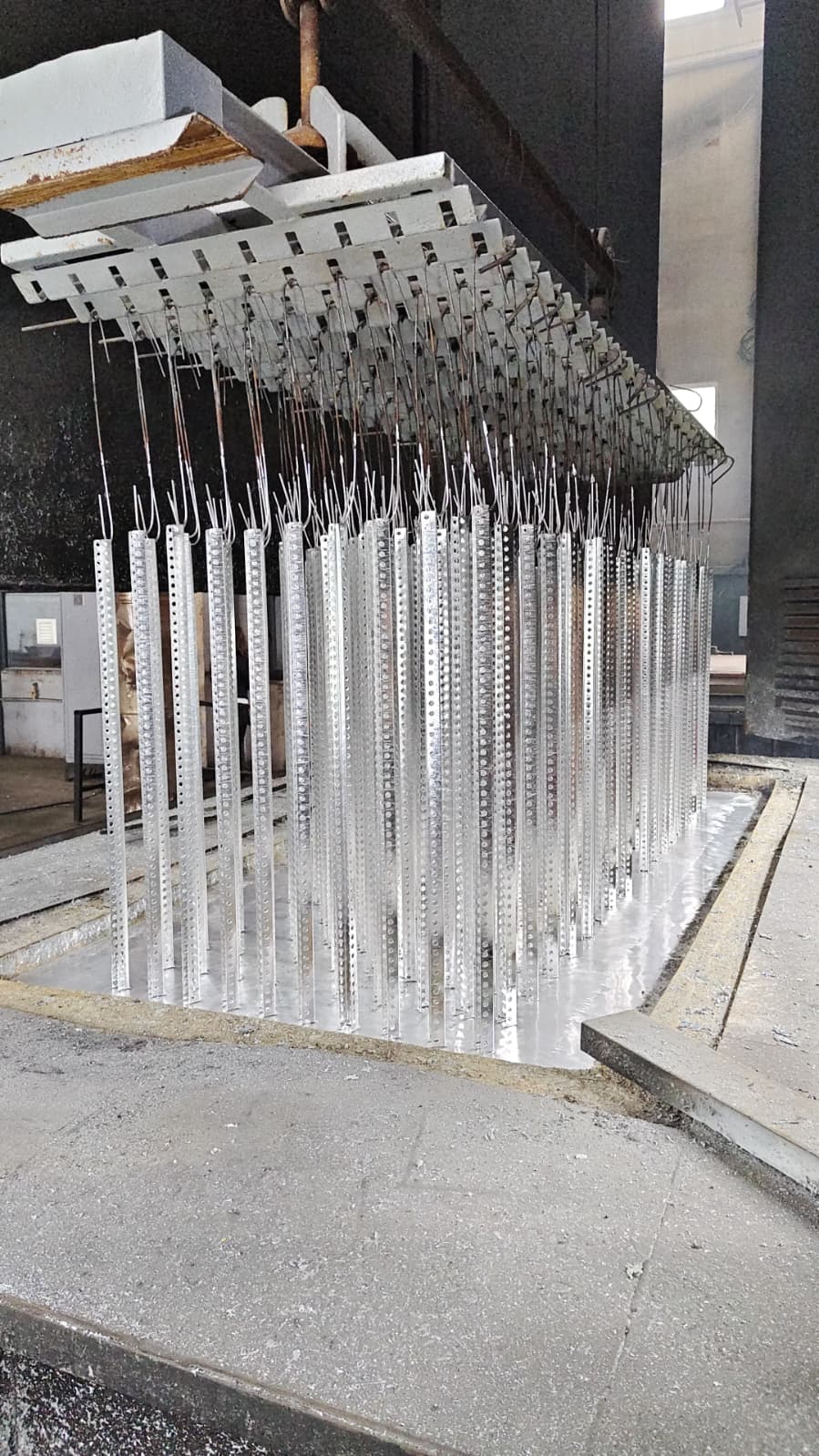
Hot-dip galvanizing after fabrication (HDG) immerses the fabricated steel article in molten zinc after cutting, punching, forming, and welding. ASTM A123/A123M-24 covers many iron and steel products, including fabricated assemblies, while excluding steel sheet galvanized on continuous lines.[3]
Because the completed article enters the bath, accessible edges, corners, holes, and weld areas can receive coating together. Total immersion also requires attention to drainage, venting, overlaps, size, distortion risk, and threads. It is a different manufacturing route, not simply “more zinc.”
Stainless steel
Stainless steel uses a corrosion-resistant base alloy rather than zinc over carbon steel. Grade, surface condition, fabrication, weld treatment, contamination, and environment all matter. “Stainless” without a grade and condition is incomplete.
Where chlorides, chemicals, elevated temperature, deposits, or crevices are credible, require a documented grade-selection basis and project data. Selection still requires project data.
Understand what fabrication changes
A finish schedule should follow the manufacturing sequence. PG coating precedes cutting and forming; EG applies through the selected plating process; batch HDG normally follows fabrication. Stainless remains stainless through its section, but fabrication can introduce contamination, heat tint, crevices, or unsuitable weld conditions.
Review these details before treating two offers as equivalent:
- Are final cut edges, perforations, welds, and formed corners protected by the stated route?
- Which surfaces are significant under the coating specification?
- Will field cutting, drilling, or welding occur after delivery?
- What approved cleaning, passivation, pickling, or coating-repair procedure applies?
- Can the component drain and vent during galvanizing and in service?
- Could mixed metals, wet debris, or trapped solution create local attack?
Batch HDG can coat accessible fabricated features, but geometry may obstruct preparation or zinc flow. The American Galvanizers Association explains that vent and drain openings let air escape and allow cleaning solutions and zinc to flow through a fabrication during galvanizing.[6] Coordinate the opening pattern and immersion orientation with the galvanizer before fabrication. Likewise, sacrificial action near exposed zinc-coated sheet edges does not make every cut acceptable.
Specify who may modify components, which procedure applies, and what evidence closes repairs after cutting, handling damage, unsuitable fasteners, or touch-up.
Define the environment before choosing
Do not select from “indoor,” “outdoor,” or “marine” alone. Map the route into exposure zones.
An atmospheric label cannot replace an exposure review. Chemical compatibility and immersion analysis need the actual chemicals, concentration, temperature, wetting, deposits, and cleaning regime.
For each zone, investigate:
- rain, condensation, time of wetness, drainage, and sheltered surfaces;
- airborne salt, industrial pollutants, washdown, splash, or immersion;
- specific chemicals, concentration, temperature, deposits, and cleaning agents;
- crevices, low points, covers, dissimilar-metal contacts, and electrical isolation;
- abrasion, impact, handling damage, UV exposure of non-metallic parts, and access;
- inspection opportunities, repair constraints, and the maintenance strategy.
A route may cross dry, condensing, sheltered, coastal, process, and washdown zones. The outdoor cable tray selection guide adds a route-based checklist, while project data and current documentation control the choice.
Use a conditional comparison matrix
The matrix below is a question set, not a declaration that one option is always better. “Potential fit” means the approach merits evaluation only when its documented configuration matches the row.
| Decision condition | Pre-galvanized | Electro-galvanized | HDG after fabrication | Stainless steel |
|---|---|---|---|---|
| Controlled exposure with limited wetting | Potential fit if coating designation, edges, and maintenance match | Potential fit with specified plating class and supplementary finish | Possible, subject to process and project needs | Possible when grade, finish, and fabrication are justified |
| Repeated condensation or weather | Assess coating data, edges, joints, drainage, and repairs | Assess the complete plating system; do not rely on “EG” alone | Evaluate post-fabrication coverage, detailing, thickness evidence, and repair | Evaluate grade against contaminants, crevices, deposits, and cleaning |
| Chloride-bearing atmosphere | Require measured exposure and product evidence | Require measured exposure and plating evidence | Evaluate zinc system against salinity, wetness, damage, and maintenance | Select a documented grade; generic stainless is insufficient |
| Chemical or washdown area | Obtain chemical compatibility data | Obtain chemical and supplementary-finish data | Atmospheric guidance alone is insufficient | Match alloy, surface, weld condition, and cleaning regime to chemistry |
| Frequent field modification | Define edge and damage treatment | Define replating or approved repair constraints | Define repair after cutting or welding | Control contamination, burrs, weld treatment, and finish restoration |
| Mixed-metal assembly | Review galvanic couples and wet interfaces | Review substrate, coating, and mating hardware | Review compatible fasteners or isolation | Review coupling to zinc, carbon steel, aluminium, and other metals |
| High visual-finish priority | Agree acceptance sample and edge expectations | Agree appearance and supplementary treatment | Agree appearance criteria; brightness alone does not prove quality | Specify surface finish, fabrication marks, weld treatment, and cleaning |
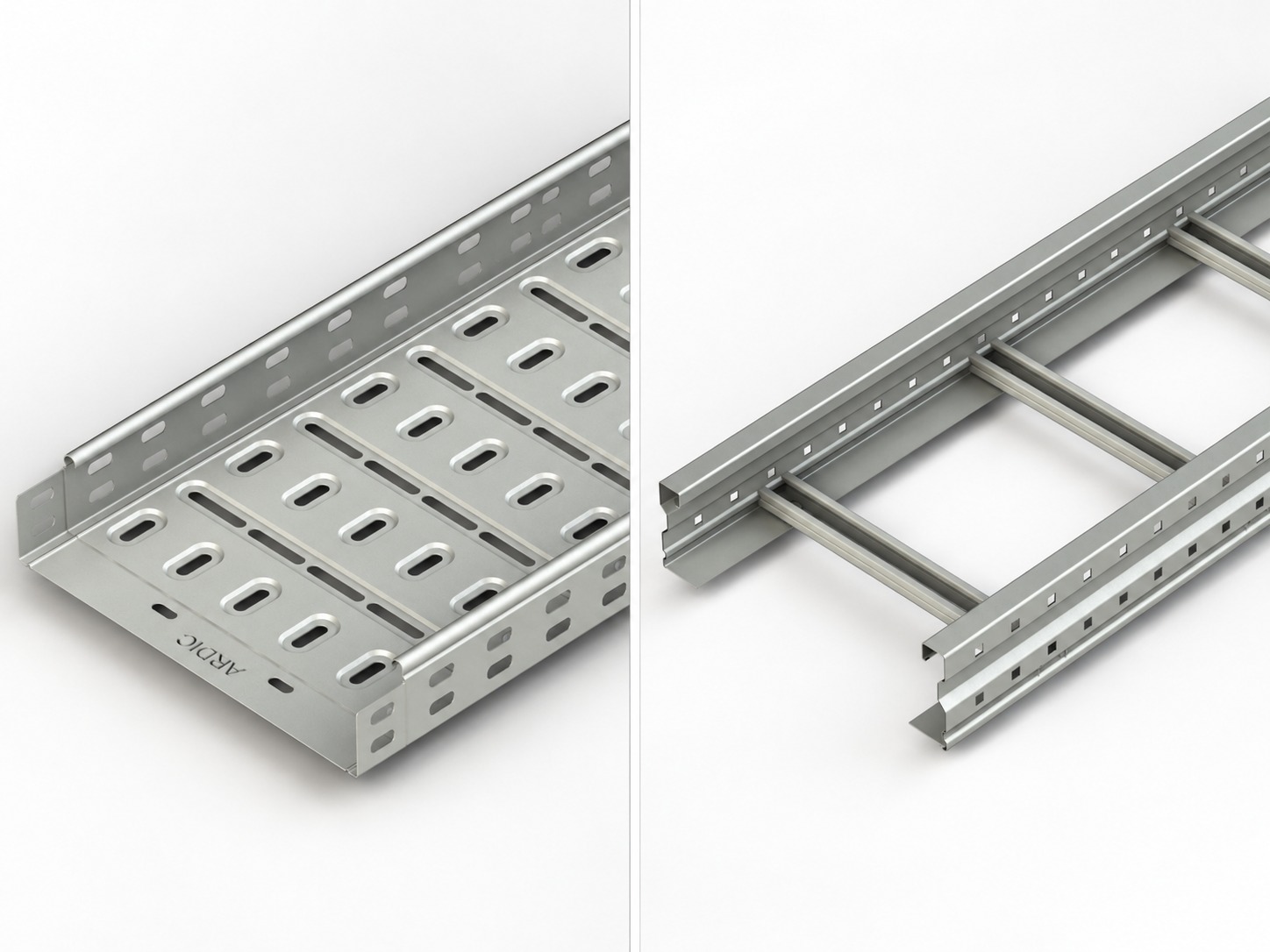
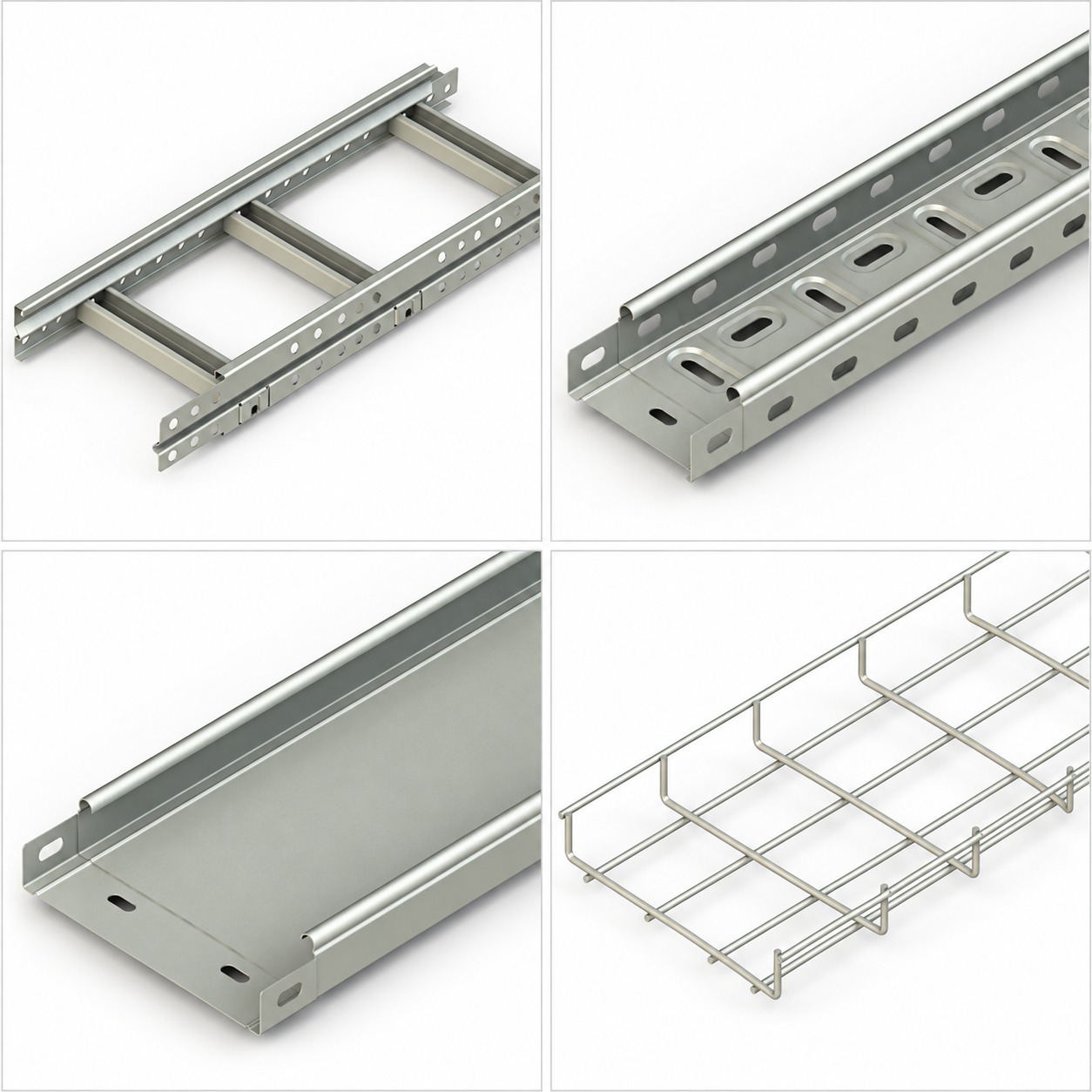
Use the table to shortlist options, then compare documents for the complete package. The cable tray and cable ladder pages help navigate categories, but do not prove finish suitability.
Keep coating and product standards separate
Three layers of acceptance are often confused:
- Material or coating standard: describes feedstock or a coating process, properties, classes, tests, and acceptance within its scope.
- Complete system product standard: addresses the cable tray or cable ladder system and its tested or declared characteristics.
- Project acceptance: applies the specified edition, environmental basis, drawings, submittals, inspection plan, local requirements, and approved deviations.
IEC 61537:2023 specifies requirements and tests for cable tray and cable ladder systems intended to support and accommodate cables. Its scope and test framework are different from ASTM A653/A653M-25a, ASTM A123/A123M-24, or ASTM B633-23.[5] A coating document does not by itself establish load performance or complete-system conformity. Equally, a product-standard declaration does not remove the need to identify material, finish, grade, and environmental suitability.
Always state the standard number, edition, jurisdictional adoption, and exact scope. Do not mix coating mass, local thickness, nominal thickness, grade, class, and corrosion category as if they were interchangeable. Ask the supplier to identify the basis and test method for every reported value.
Specify the complete installed system
A tray body is only part of the route. Include fittings, splices, covers, supports, fasteners, bonding components, and equipment interfaces. Incompatible hardware or water-trapping details can undermine the system.
A useful finish schedule should state:
- environment and zone boundaries;
- base material, stainless grade where applicable, and product form;
- coating route, standard, edition, designation, class, or supplementary finish;
- significant surfaces and required coating evidence;
- fabrication, venting, drainage, and appearance criteria;
- compatible accessories, fasteners, and transitions;
- field-modification and approved repair procedures;
- inspection, records, handling, storage, and maintenance inputs.
Do not infer product availability or compliance from this list. The existing Ardıç article on hot-dip galvanizing for cable management gives added process context without replacing a project specification.
Inspect, repair, and maintain by finish
At receipt, verify labels and documents. Check for damage, wet packaging, mixed batches, unidentified hardware, sharp edges, blocked drainage, coating discontinuities, distortion, and contamination under the governing acceptance plan.
For zinc-coated components, distinguish harmless appearance variation from a defect using the applicable specification—not a photograph or a colour preference. For stainless, prevent contact with carbon-steel grinding debris and inspect fabricated and welded areas under the specified finish procedure. Do not assume stainless needs no cleaning or inspection.
Control cutting, drilling, grinding, and welding. Confirm that repair materials and preparation suit the original finish and project rules; replacement may be better than an improvised repair.
After handover, tailor inspection to exposure and consequence. Look for trapped debris, standing moisture, damaged covers, failed isolation, loose interfaces, coating loss, red rust on adjacent carbon steel, stainless tea staining or localized attack, and unauthorized additions. Set intervals from observed conditions and the owner’s maintenance plan; no universal interval fits every route.
Avoid common selection mistakes
- Treating all zinc finishes as equivalent: name the process and governing document.
- Selecting by location label: record wetness, salt, chemicals, temperature, deposits, and cleaning.
- Assuming HDG always wins or EG is indoor-only: exposure, geometry, and the specified system control the decision.
- Assuming PG is always cheapest: compare installed and maintenance requirements.
- Writing only “stainless steel”: state grade, product form, finish, weld treatment, and contamination controls.
- Ignoring accessories: align tray, supports, joints, fasteners, covers, and bonding details.
- Turning a process standard into certification: verify complete-system and project acceptance separately.
Frequently asked questions
Short answers to common material and finish selection questions.
No. Pre-galvanized sheet or strip receives zinc before the final component is cut and formed. Batch HDG immerses the fabricated article, so the manufacturing sequence and treatment of accessible fabricated details differ.
That statement is too broad. Evaluate the specified plating class, supplementary finish, substrate, component details, moisture, contaminants, handling, and maintenance against the actual project environment.
No. Stainless selection depends on grade, surface condition, fabrication, chlorides, chemicals, temperature, deposits, crevices, contamination, and cleaning. Aggressive conditions may require a more resistant alloy or another strategy.
No. A coating standard addresses material or coating requirements, while IEC 61537 addresses cable tray and ladder systems. Project acceptance must verify each applicable requirement and document separately.
State the exposure zones, material or grade, coating route, standard and edition, designation or class, significant surfaces, accessories, field-repair rules, inspection evidence, and maintenance assumptions. Avoid relying on abbreviations such as PG, EG, HDG, or SS without those details.
Conclusion
PG, EG, HDG, and stainless steel are distinct routes, not rungs on a universal durability ladder. Choose from the exposure, fabrication, geometry, compatible hardware, evidence, and maintenance plan. Keep coating and complete-system standards separate.
For a project-specific discussion based on your route, environment, and documentation needs, contact Ardıç Elektrik.
Sources
- ASTM A653/A653M-25a: zinc-coated or zinc-iron alloy-coated steel sheet
- ASTM B633-23: electrodeposited zinc coatings on iron and steel
- ASTM A123/A123M-24: zinc coatings on iron and steel products
- American Galvanizers Association: venting and draining
- IEC 61537:2023: cable tray systems and cable ladder systems